Runoff from a neighbor’s yard or a higher street usually enters a property at the lowest point along a shared property line, and the fix depends on what’s actually happening there. Regrading, a berm, or a swale can redirect surface flow, while a French drain handles water moving through the soil. In New Orleans’ flat, low-lying terrain, confirming the entry point before choosing a fix saves time, money, and repeat problems.
If you are trying to stop water runoff from a neighboring property in New Orleans, the first step is finding out exactly where that water crosses onto your land. Water follows gravity, not property lines, so your yard often ends up holding the extra when a neighbor sits just a few inches higher.
At Big Easy Landscaping, we walk New Orleans yards after storms to see exactly where water crosses the line and why. Our team looks at the grade, the soil, and the path the water actually takes before recommending a fix.
Every yard handles runoff differently, so a solution that worked for a neighbor might not work for you. Contact us today to schedule a drainage assessment for your New Orleans property.
How Do You Tell Where a Neighbor’s Runoff Is Entering Your New Orleans Yard?
Diagnosing cross-property runoff starts with watching your yard while it actually happens, not guessing after the ground dries. A few simple checks usually point straight to the entry point.
- Watch it happen: stand near the property line during a real storm and track exactly where water crosses.
- Check the grade: compare the slope on both sides of the entry point with a simple line level.
- Follow the erosion: trace washed-out soil or bare channels back toward their source.
- Rule out your own roof: confirm gutters and downspouts aren’t the real culprit first.
Watching Your Yard During a Real Rainstorm
The clearest diagnosis happens during an actual downpour, not after it. Pull on boots and walk your property line while it’s raining, watching for the first spot where water visibly crosses from a neighbor’s yard or the street.
Note whether the water arrives as a fast, visible sheet across the grass or as a slower seep that shows up as soft, spongy ground. Fast surface flow usually points toward a grading or swale fix, while a soft, slow-draining spot points toward standing groundwater that a French drain handles better.
Take a photo of the exact entry point and mark it with a stake so the location doesn’t get lost once the yard dries out.
Checking the Grade Along Your Property Line
Once you know roughly where water enters, check the actual slope on both sides of that spot. A cheap line level, or even a garden hose level, can show whether your neighbor’s yard, a shared fence line, or the street sits higher than your own grade.
In New Orleans, even a few inches of elevation difference is enough to send a meaningful amount of water your way during a heavy storm. If your side of the line dips lower than everything around it, that low spot is very likely acting like a drain for the whole block, not just the property next door.
Looking for Erosion Channels or Rills
Erosion tells its own story long after the rain stops. Small channels, bare patches of soil, or lines of washed-out mulch running toward your house usually trace the exact path repeat runoff has carved over time.
Follow that channel backward and it will often lead directly to the property line, a downspout on a neighboring structure, or a low point in the street curb. These channels are useful evidence if you ever need to explain the problem to a neighbor or the parish, since they show a pattern rather than a single bad storm.
A quick sketch of where these channels run makes it much easier to plan grading, berms, or drains later.
Ruling Out Your Own Gutters and Downspouts First
Before blaming a neighbor’s yard, confirm the water is not coming from your own roof. Downspouts that dump water within a few feet of the foundation, or gutters that overflow during heavy rain, can mimic the exact symptoms of cross-property runoff.
Extend downspouts away from the foundation and watch the next storm before assuming the source is next door. If the same wet spot keeps showing up even with your own drainage working properly, the neighboring property or the street is the more likely source.
This simple check saves time and keeps the real fix focused on the actual source of the water.
Common Sources of Cross-Property Water and What Helps
Cross-property runoff usually traces back to one of a handful of common sources, and each one calls for a slightly different fix. The table below breaks down the most frequent sources we see across New Orleans yards.
| Likely Source | Effect on Your Yard | What Helps |
|---|---|---|
| Higher-elevation neighbor lot | Sheet flow crosses the property line and pools along the shared fence or the low side of the yard | Regrading, a berm, or a swale along the property line |
| Street crown and curb runoff | Water sheets off the road during heavy rain and collects near the front yard or driveway apron | A surface or channel drain, or a graded swale carrying water back to the street drain |
| Shared low spot between two yards | Water from both properties concentrates in one soft, always-wet corner | A French drain to intercept the seepage below grade |
| New construction or added hardscape upslope | Paved or built-up ground upstream sheds more water, faster, than the original grade absorbed | A rain garden or an expanded swale sized for the added runoff volume |
Grading and Drainage Fixes That Stop Runoff at the Property Line
Most cross-property runoff problems respond to one of four fixes, often combined. A professional drainage system built around your yard’s actual grade usually solves what a single quick patch cannot.
Regrading the Low Side of Your Yard
Regrading changes the shape of the ground itself so water moves away from the low spot instead of pooling in it. A modest slope, roughly a few inches of fall over the first several feet, is usually enough to send water toward a swale or the street instead of your foundation.
Our land leveling and grading services handle this kind of precision work, since even a small mistake in slope direction can make a runoff problem worse instead of better. Regrading works best when the low spot sits entirely on your own property and isn’t fed by a much larger upstream source.
Building a Berm-and-Swale Combination Along the Property Line
A berm is a low, mounded ridge of soil that blocks water from crossing onto your property, while a swale is the shallow, gently sloped channel that carries the blocked water somewhere useful instead of letting it pool against the berm. Paired together, they intercept a neighbor’s runoff at the property line and route it toward the street or a drainage outlet.
Swales typically need a few feet of width and a gentle slope along their length to keep water moving without eroding the channel. This combination works well for surface flow that arrives quickly during a storm, rather than water that has already soaked into the ground.
Choosing Between a French Drain and a Surface Drain
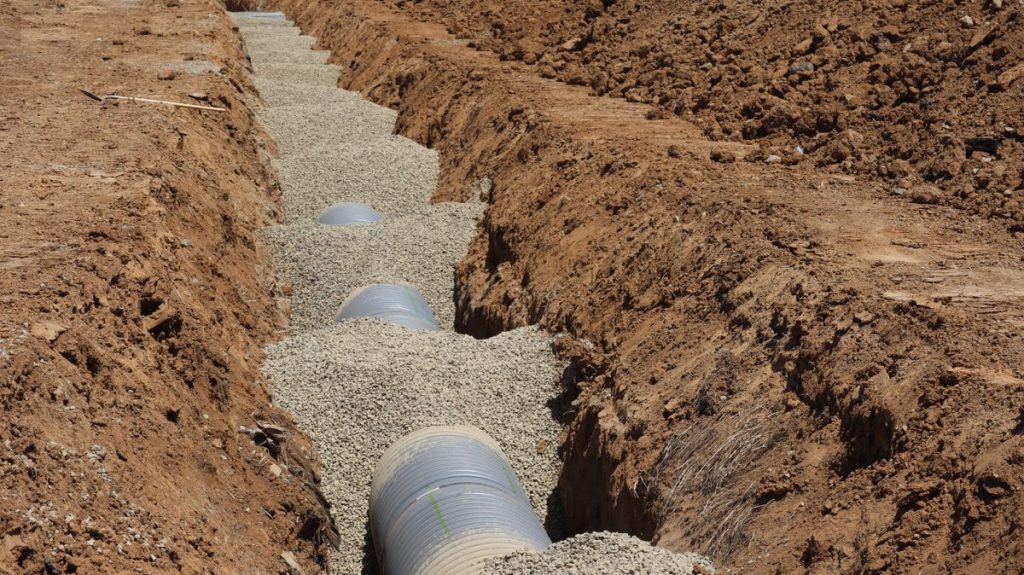
A French drain is a buried, gravel-filled trench with a perforated pipe that pulls water out of soggy soil below the surface. A surface or channel drain uses a grated inlet set flush with the ground to catch fast-moving water before it has a chance to soak in.
If your yard stays soggy for days after a storm, a French drain usually solves it; if water rushes across the surface and disappears within an hour, a surface drain is the better match. Many New Orleans yards with a real cross-property runoff problem end up needing both working together.
Using a Rain Garden to Catch and Slow the Water
A rain garden is a shallow, planted basin positioned to catch runoff and let it soak into the ground slowly instead of continuing across your yard. Sited correctly, at least 10 feet from your foundation, it can absorb a meaningful share of the water a neighbor’s yard or the street sheds during a storm.
Native, deep-rooted plants help the basin drain within a day or two after rain, rather than sitting as a standing pool. A rain garden works best paired with a swale or berm that first directs water into the basin instead of letting it spread across the whole yard.
When Runoff Is a Parish Problem vs. a Private Landscaping Fix
If the water clearly originates on your own property, or the fix only requires work inside your property line, this is a private landscaping job from start to finish. If the source is a public street, a curb inlet, or a parish drainage canal that can’t keep up, the fix belongs with your parish’s drainage department instead of a shovel in your own yard.
New Orleans sits on flat, low-lying ground and gets roughly 63 inches of rain in an average year, so small grading mistakes get tested constantly. Louisiana’s general rule on natural drainage holds that a lower property must accept water flowing naturally from higher ground, though that doesn’t usually cover water a neighbor has redirected or increased.
When you’re not sure which side of that line you’re on, a landscaper familiar with New Orleans drainage patterns can usually tell within one site visit. For any real dispute with a neighbor, a quick conversation with your parish or an attorney is worth having first.
Protect Your New Orleans Yard Before Runoff Causes Real Damage
Runoff you didn’t create can still erode your soil, drown your grass, and eventually threaten your foundation if it goes unaddressed. At Big Easy Landscaping, we design grading, swales, and drains around the exact way water moves through your yard, not a generic template.
The sooner the entry point is identified, the fewer repairs a New Orleans storm season can force on you later. Call us today to get a grading and drainage plan built for your yard.
Frequently Asked Questions
Is a neighbor responsible for water draining onto my property?
Louisiana generally requires a lower property to accept water flowing naturally from a higher neighboring lot, so a neighbor isn’t automatically responsible just because their yard sits above yours. That changes when grading, new construction, or added paving has redirected or increased the natural flow onto your land. A parish office or attorney can clarify a specific dispute.
How do I stop water runoff from a neighbor’s yard?
Start by confirming exactly where the water crosses your property line during an actual rainstorm, then match the fix to what you see. Fast surface flow usually calls for regrading, a berm, or a swale, while water that soaks in slowly and leaves soggy ground calls for a French drain instead. Combining two of these fixes handles most yards.
What is the difference between a French drain and a surface drain?
A French drain is a buried, gravel-filled trench with a perforated pipe that pulls water out of wet soil below the surface, while a surface drain uses a grated inlet to catch fast-moving water on top of the ground. Many yards with a real runoff problem end up needing both.
How does a swale help with a drainage problem?
A swale is a shallow, gently sloped channel that carries surface water away from a low spot instead of letting it pool there. It works especially well for fast-moving runoff coming from a higher neighboring yard or the street during a storm. Pairing a swale with a small berm usually improves how well it intercepts the water.
Does a berm actually stop water from flowing onto my property?
A properly built berm can block or redirect a meaningful amount of surface water crossing your property line, especially when it’s paired with a swale that gives the blocked water somewhere to go. A berm alone, without anywhere for the water to drain, can just shift the pooling problem to a different spot in your yard.
How do I know if a drainage problem is a parish issue instead of a private one?
If the water clearly originates on your own property, or a fix only requires work inside your property line, it’s a private landscaping job. If the source is a public street, a curb inlet, or a drainage canal that can’t keep up during storms, the fix belongs with your parish’s drainage department instead.
How far should a rain garden be from my house?
A rain garden should sit at least about 10 feet from your house or foundation so infiltrating water doesn’t migrate back toward the slab or a basement. Sizing the basin to roughly 10 to 20 percent of the paved or roofed area draining into it keeps the basin effective without oversizing the project.
How can I tell exactly where runoff is entering my yard?
Walk your property line during an actual downpour and watch for the first spot where water visibly crosses from a neighbor’s yard or the street, rather than guessing after the ground has dried. Mark that spot and check the grade on both sides of it to confirm which direction the land naturally slopes.