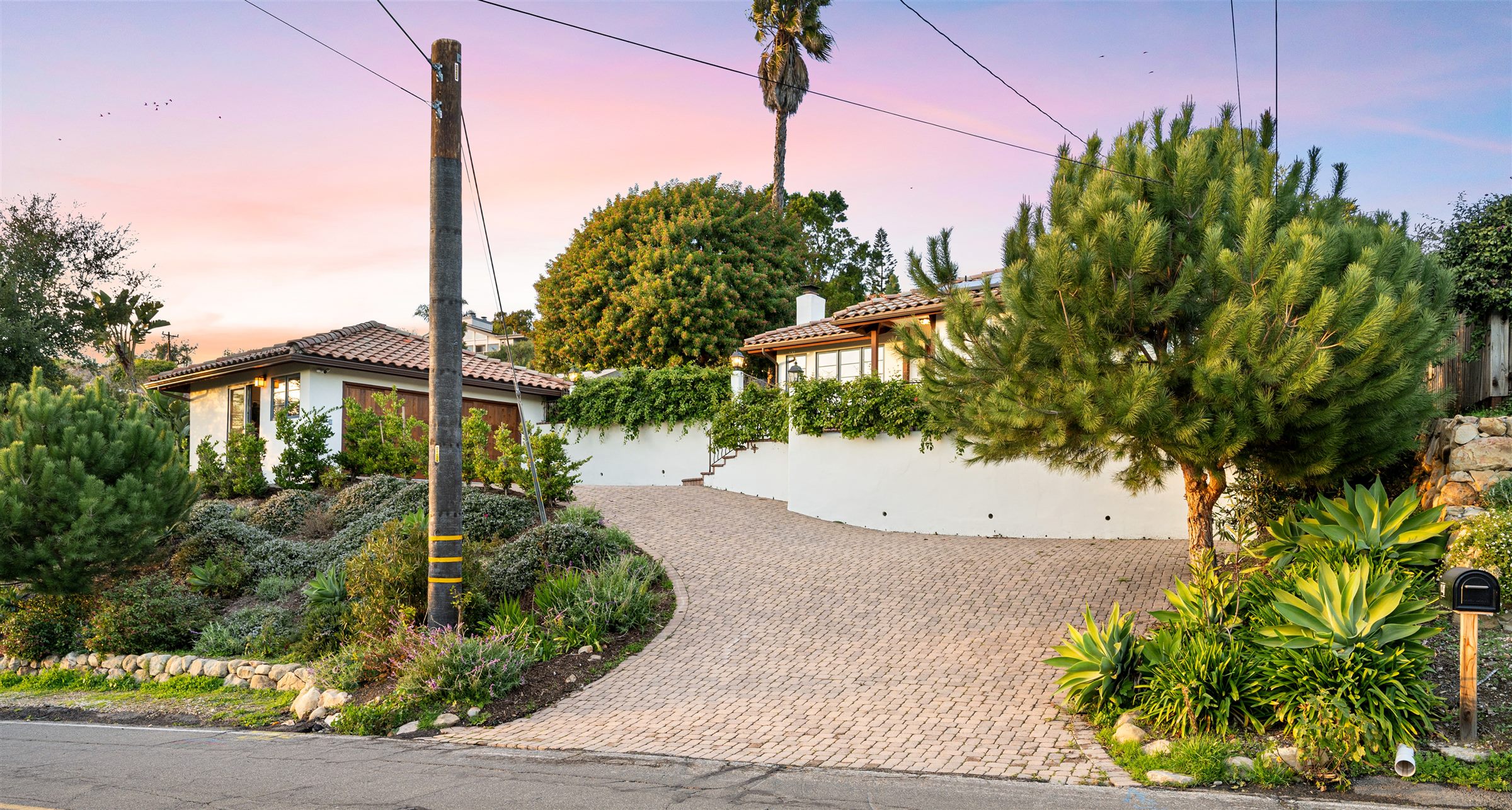
A circular driveway is a good idea in New Orleans when the lot has enough depth for a car to complete the loop without reversing and enough frontage for two entrances your parish will allow. It gives safe turning and easy guest drop-off, but it uses more paving and needs drainage planned first. On shallow or narrow lots, a single curve or a teardrop turnaround usually works better.
At Big Easy Landscaping, we find the circular driveway conversation almost always starts with how it looks. Homeowners across Metairie and the North Shore arrive with a photograph and a shape in mind.
The shape is the easy part. What decides whether the drive works is frontage, turning geometry, and where the water goes.
Getting those three right first means the shape you want is still available afterward. Contact us today to have your frontage measured before you commit to a design.
When a Full Loop Fits the Lot
A circular driveway is a good idea in New Orleans when your lot has the depth for a car to follow the loop without reversing and the frontage for two separate entrances. On shallow or narrow lots, it shrinks into a tight, decorative ring, and a single curve or teardrop turnaround usually does the job better.
A Full Circle Needs Real Depth
A true circular drive requires enough distance between the street and the house to complete the loop without the curve becoming impossibly tight. On shallow lots the circle ends up so compressed that a normal car cannot follow it.
The test is whether a vehicle can enter, follow the arc, and exit without reversing. If it cannot, the drive is decorative rather than functional.
Many older New Orleans lots simply do not have the depth. That is not a failure of design; it is the lot telling you to use a different shape.
Two Entrances Need Frontage to Match
 A circular drive touching the street twice needs both openings spaced to satisfy your parish or city, so confirm the requirement locally before planning two entrances. Curb cuts also have to clear trees, utility poles, and drainage inlets.
Check what sits in the right of way before assuming both openings are possible. A single mature oak can rule out one of them entirely.
Where two openings will not fit, a teardrop turnaround delivers most of the benefit from one entrance. It reads much the same from the street.
A Curve Works Almost Anywhere
A simple curved drive running from one entrance to the house has far fewer constraints. It suits narrow frontages, deep lots, and awkward corners equally well.
The curve also gives you somewhere to put the fall. Straight runs force water to the lowest point in a line, while a curve lets you shape where it collects.
For most properties we assess here, a well-judged curve outperforms a forced circle. It costs less in material too.
Plan the Drainage Before the Shape
New Orleans gives you rain in volume, and a driveway is a large impermeable surface. Where that water goes is a design decision, not an afterthought.
Decide the Fall Before the Outline
Every drive needs a direction for water to run. Fixing that first means the shape can follow the fall rather than fighting it.
Draw the water path on the plan before the driveway outline. Any shape that sends water toward the house or the garage gets redrawn at that stage.
Our drainage service works alongside driveway design for exactly this reason. Retrofitting drainage into finished concrete is the expensive version.
Watch the Low Point of the Curve
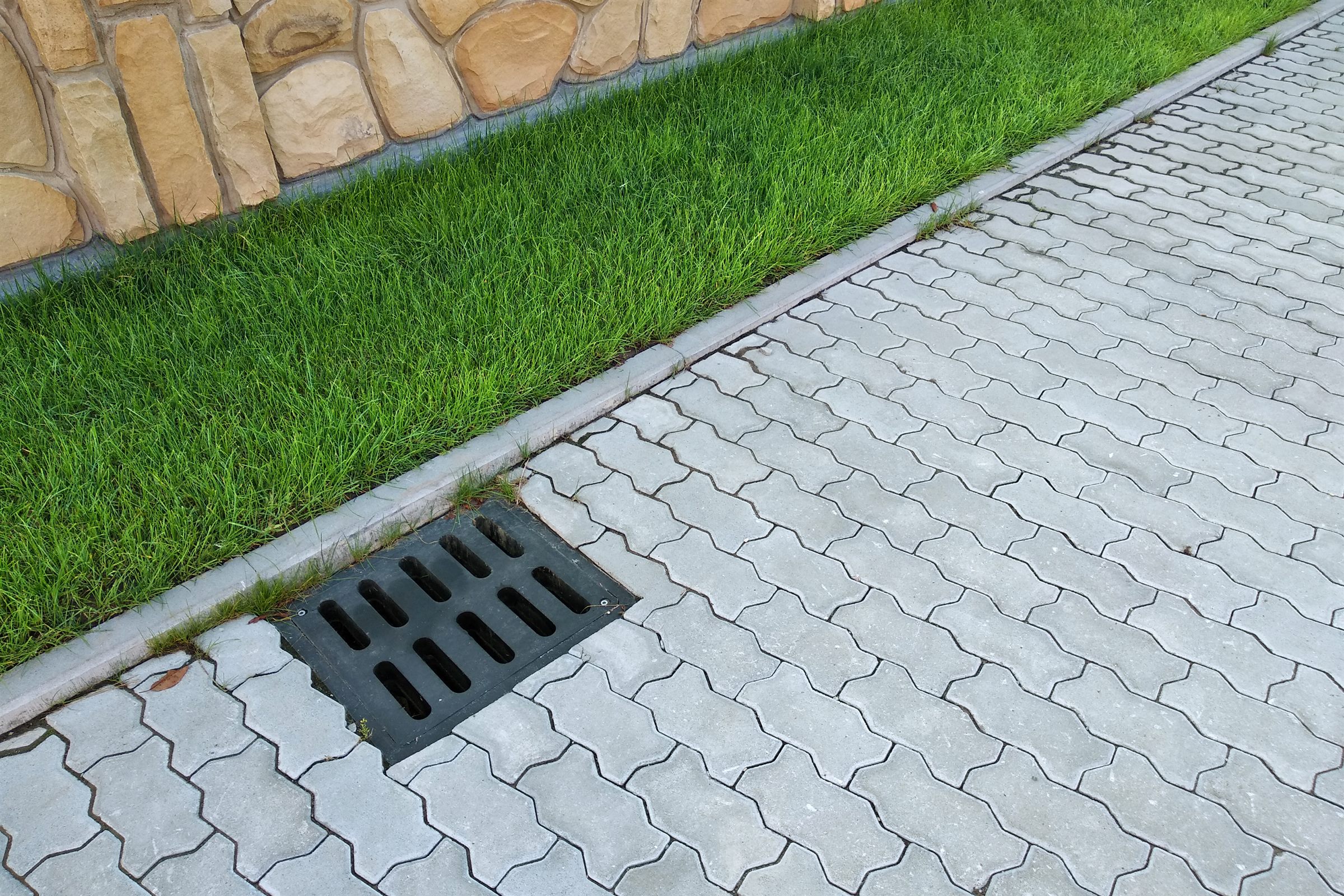 A curve creates an inside edge that naturally collects water. Without a channel or an inlet, that point becomes a standing puddle after every storm.
Identify it on the plan and give it somewhere to drain. A trench drain across the inside of the curve is simple during construction.
Left untreated, it becomes the part of the drive that grows algae and stays slick. Homeowners then blame the surface rather than the layout.
Account for What the Drive Displaces
A large paved area pushes water somewhere it was not going before. Often that somewhere is a neighbor’s yard or your own foundation.
Check where the runoff ends up at design stage. Adding a French drain or a dry well at the receiving end is straightforward when planned.
This matters more on the North Shore, where lots are larger and the fall is longer. The volume arriving at the bottom is correspondingly greater.
Match the Material to the Shape
Curves and circles are harder on some materials than straight runs are. The shape narrows your sensible options, and our concrete driveway service is where most of these decisions get settled.
| Material | How It Handles a Curve | Watch For |
|---|---|---|
| Poured concrete | Forms to any curve cleanly | Control joints have to follow the curve or it cracks |
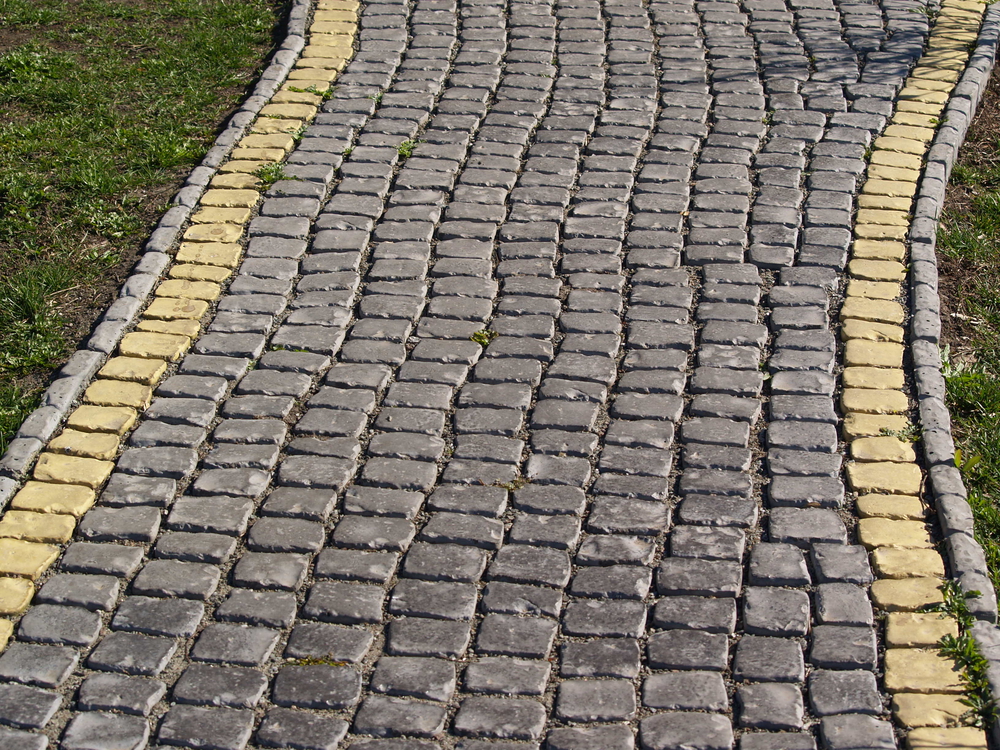
| Pavers | Excellent, cut to the arc | Edge restraint is critical or the curve spreads |
| Gravel | Follows any shape | Migrates on a slope and washes in heavy rain |
| Shell | Traditional here, follows curves | Needs topping up and firm edging to hold shape |
Edge restraint matters more on a curve than anywhere else. Our hardscaping service details the edge as part of the build rather than as a later addition.
Design the Turning Space Around Real Cars
The purpose of a circular or curved drive is turning without reversing into the street. That only works if the geometry suits the vehicles using it.
Measure Against the Largest Vehicle
Design around the biggest vehicle that will use the drive regularly, not the smallest. A truck or a large SUV needs noticeably more room than a sedan.
Include the occasional delivery vehicle in your thinking. A drive that a courier cannot turn in loses much of its point.
Walk the arc with a tape measure before finalizing. The paper version usually looks more generous than the built one.
Keep the Inside Radius Honest
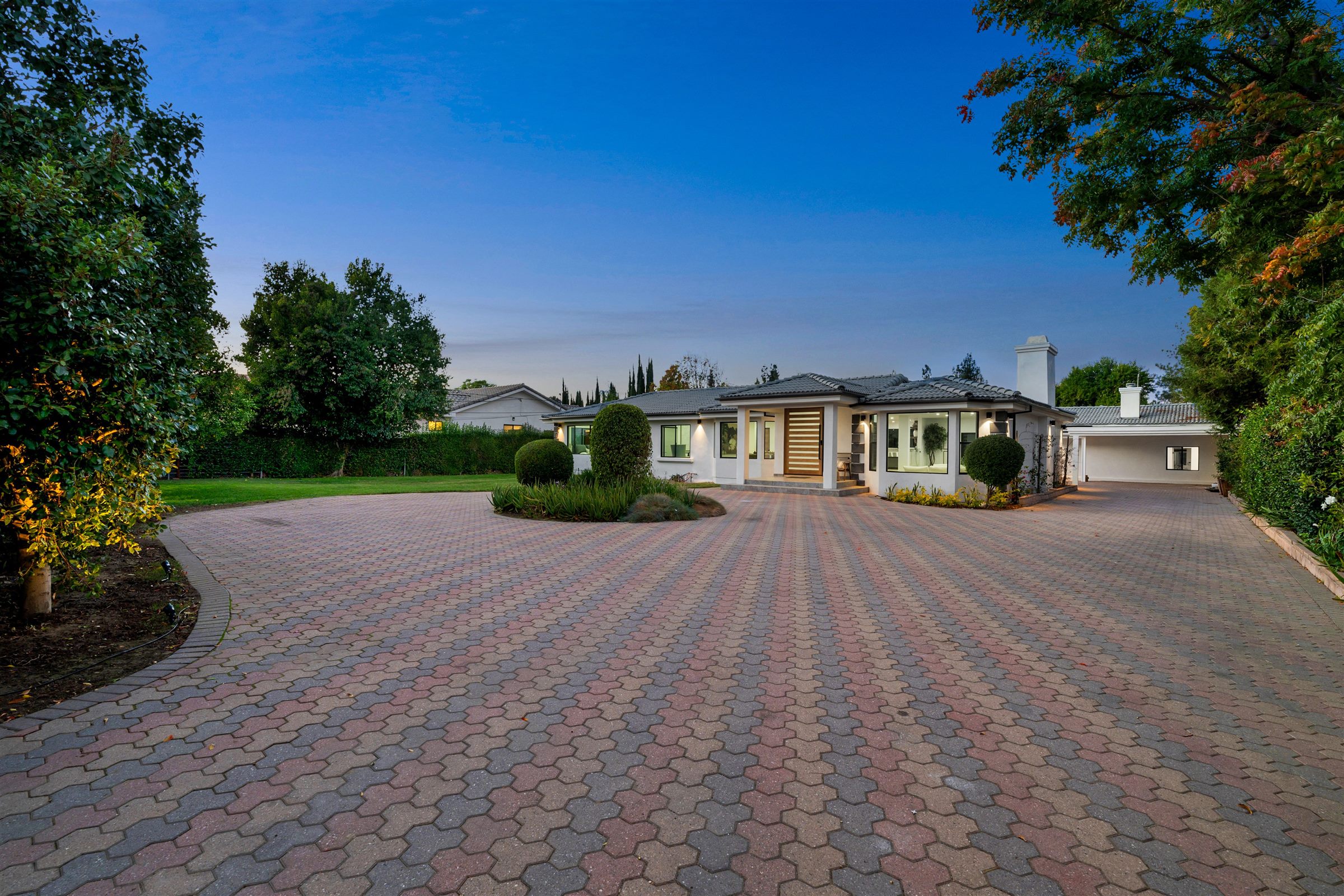 Tight inside curves force drivers to cut the corner, which means wheels running onto the grass every single time. That strip then becomes a permanent bare patch.
Widening the inside of the curve slightly costs little at construction. Repairing the turf beside a too-tight curve costs every year.
Look at any existing drive nearby with worn corners. That wear is the geometry telling you what it needed.
Allow for Parking Without Blocking the Loop
A circular drive with a car parked on it stops being a loop. Plan a widened bay or a spur if regular parking is expected.
This is the most common regret we hear about finished circular drives. The shape works beautifully until someone parks on it.
A short spur off the curve solves it without breaking the line. It is far cheaper designed in than added later.
Get the Frontage Measured Before You Choose a Shape
Driveway design here is decided by three things in order: what the frontage allows, where the water goes, and which vehicles have to turn. The shape follows those answers.
At Big Easy Landscaping, we measure the lot, set the drainage plan, and then show you the shapes that will actually work on your property. Call us today to start with a measured assessment rather than a photograph.
Frequently Asked Questions
How big should a circular driveway be?
A circular driveway should be big enough for the largest vehicle that uses it to follow the loop without reversing or running onto the grass. The size depends on lane width, the inside radius, and the depth between the street and the house, so walk the turn out on site first. Many older New Orleans lots fall short on depth.
What are those circular driveways called?
They are usually called circular driveways or circle drives. A drive that enters and leaves the street at two points with a curve past the front door is also called a horseshoe, half-circle, or U-shaped driveway. A loop off a single entrance is often called a teardrop or turnaround.
Is a curved driveway more expensive than a straight one?
A curved driveway usually costs somewhat more, because a curve uses more surface area than the shortest line and needs more careful edge work. Poured concrete curves need control joints following the arc, and pavers need cutting. The difference is modest against the total and often justified by the turning space gained.
What is the best driveway material for New Orleans?
Poured concrete and pavers both perform well and handle curves cleanly. Gravel and shell suit the look of some properties but migrate on slopes and wash in heavy rain. Whichever you choose, drainage planning matters more to the outcome than the material does.
How do you stop water pooling on a driveway?
Decide the direction of fall before the shape is finalized, and give the inside of any curve somewhere to drain. A trench drain or inlet at the natural low point is simple to install during construction. Retrofitting drainage into finished concrete costs considerably more.
Do you need a permit for a new driveway?
Permit requirements for a new driveway vary by parish and by whether the work involves a new curb cut. Check with your local authority before construction rather than after. Curb cuts in particular usually involve the public right of way and are handled separately from the drive itself.
How wide should a curved driveway be?
A curved driveway should be wide enough that vehicles do not cut the inside corner, which is where curves fail in practice. Design against the largest vehicle using it regularly rather than the smallest. A slightly generous inside radius costs little at build and saves the turf beside it.
Can you park on a circular driveway?
You can, but a parked car interrupts the loop and removes the turning function. Plan a widened bay or a short spur off the curve if regular parking is expected. A bay or spur is far cheaper designed in than added after the drive is finished.